
Cyber Threat Intelligence NLP Pipeline (Huawei)
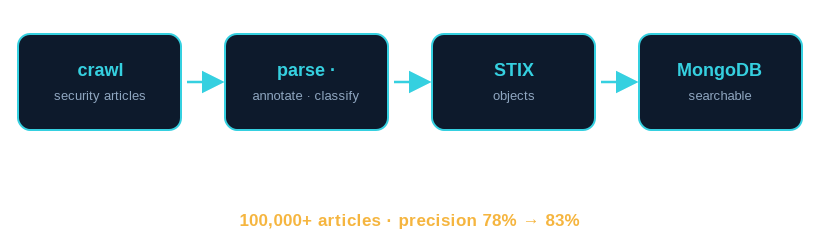
Context. At Huawei’s German Research Center, the Big Data Threat Analysis team needed to turn the firehose of public security writing into structured, queryable threat intelligence.
What I did. Built an end-to-end pipeline that crawls security articles, parses and annotates them, and classifies the content into STIX objects (the standard format for cyber-threat intelligence). A human-in-the-loop stage lets analysts correct the model, and that feedback raised classification precision from 78% to 83% over 100,000+ articles. I migrated storage from flat files to MongoDB, making every article searchable in seconds, and turned the research prototype into production-ready, documented code — batch processing, scheduled jobs, failure monitoring and retry, RBAC and versioning included.
Tech: Python, Flask, NLP, MongoDB, scheduled batch processing.
Research project at Huawei (via Hays) — sanitized overview.